
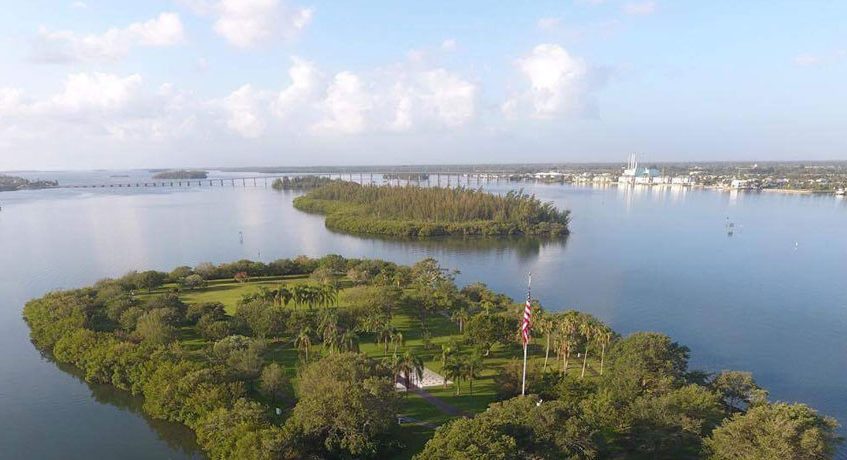
Indian River County – The Indian River Lagoon
Saving the Indian River Lagoon is critical for the citizens of Indian River County. We depend on a healthy lagoon for our economy, our tax base and jobs, and for our recreation.
The Indian River Lagoon system spans 156 miles of Florida’s East Coast. It is an estuary, a transitional environment set between the land and the ocean. In estuaries, fresh water from uplands and tributaries meets and mixes with water from the ocean. The Indian River Lagoon is a particular type of estuary called a lagoon: a shallow estuary separated from the ocean by barrier islands. Lagoons like the Indian River Lagoon exchange water with the ocean only through inlets.
The Indian River Lagoon is home to a vast constellation of plants and animals. More than 2,000 species of plants, 600 species of fish, 300 species of birds, and 53 threatened or endangered species inhabit the Indian River Lagoon. It is one of the most biologically diverse estuaries in North America, with approximately 4,000 species. All of these flora and fauna rely on the water quality of the lagoon for their lives. Keeping a high-level of water quality is the responsibility of the citizens that reside along the lagoon.
Indeed, the Indian River Lagoon is an economic driver for the 5 counties it borders, including Indian River County. A recent study by the East Central Florida and Treasure Coast Regional Planning Councils showed the total annual economic output (value received) from the Indian River Lagoon in 2014 is about $7.6 billion. This same study also found that investments in projects that improve water quality in the lagoon make good economic sense. The study estimated that for every dollar spent on achieving a healthy and sustainable Indian River Lagoon, the lagoon returns $33 in total economic value.
That is why Democrats of Indian River County support a clean environmental economy and an increase in jobs that are bio-sustainable. View our policies below!
Policy Statement – Indian River Lagoon and Water Resources
Democrats of Indian River County support federal, state, and local government action to restore and conserve all water resources of Indian River County.
Critically needed federal, state and local government actions to include cooperative planning and funding to proactively:
- provide for public education relative to public interests and the compelling need to restore and preserve all County water resources – particularly the Indian River Lagoon,
- convert existing septic tank systems to municipal wastewater collection and treatment systems,
- upgrade municipal wastewater treatment systems to state-of-the-art advanced treatment,
- identify and eliminate or treat existing stormwater pollutant sources including agricultural sources,
- restore and preserve aquatic habitat.
Background
- Indian River County’s water resources and associated ecosystems are inherent to the quality of life within the County.
- Over the past 50+ years, the quality of County water resources has significantly diminished due to numerous causes including increased population, growth, and associated land uses.
- To restore and maintain County water resources, adverse human impacts upon County water resources must be identified, minimized, and mitigated through actions to implement state-of-the-art measures based on “Good Science” – including publication with peer review and replication.
- Public education and political leadership are key to prompt desirable actions by government and private entities; an informed and knowledgeable public is critical.
Policy Statement – Sea Turtles
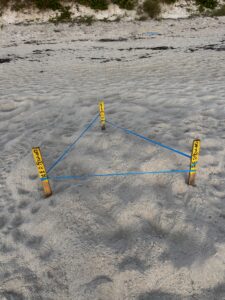
Democrats of Indian River County support protection of nesting sea turtles through enforcement of existing ordinances and beach nourishment for sea turtle nesting habitat.
Background
- The southern portion of the Archie Carr National Wildlife Refuge is in northern Indian River County. The Refuge was established in 1991 to protect beach habitat for the most significant area for loggerhead sea turtle nesting in the Western Hemisphere and the most significant area for green turtle nesting in North America. The annual sea turtle nesting season officially starts on March 1st and ends on October 31st of each year.
- Section 932.09 of the County Code of Ordinances:
- includes provisions “to protect threatened and endangered sea turtles…, by safeguarding adult and hatchling sea turtles from the impacts of light.”
- cites that: “Lights illuminating buildings or associated grounds …shall be shielded or screened such that they do not directly or indirectly illuminate the beach, or turned off after 9:00 p.m. during the period from March 1 to October 31 of each year”.
- Codes for the Town Indian River Shores (Chapter 91 ARTICLE IV) and City of Vero Beach (Chapter 46 Article IV Division 2) include provisions for protection of sea turtles.- similar to County Codes. Codes for the Town of Orchid (a) recognize the Town’s beaches “as a vital habitat for threatened and endangered sea turtles”, and (b) that “sand placement projects for renourishment, repair or restoration of the beach and/or dune may be necessary from time to time.”
- In 2005, Indian River County adopted a Habitat Conservation Plan to protect nesting seas turtles – primarily loggerhead, green, and leatherback sea turtles; the Plan cites:
- Coastline armoring (such as seawalls) remains a threat to nesting sea turtles.
- The total amount of coastline armoring remains at 10,241 linear feet, which is 8.65% of the County’s coastline.
- Indian River County manages beaches based on a Beach Preservation Plan – first developed in 1988 and typically updated every 5 years. The Plan charts maintenance of County beaches through periodic placement of sand (“nourishment”) and planting of native dune vegetation.
Policy Statement – Conservation of Environmentally Sensitive Lands
Democrats of Indian River County support federal, state, and local government action to support and fund conservation of environmentally sensitive lands via two pivotal conservation programs: Florida Forever and the Land and Water Conservation Fund (LWCF).
Background
- Democrats of Indian River County recognize the critical importance of preserving our natural landscapes, safeguarding biodiversity, and ensuring public access to recreational spaces.
- Established in 1999, Florida Forever is the state’s premier conservation and recreation lands acquisition program, succeeding the Preservation 2000 initiative. Since its inception, Florida Forever has invested approximately $3.3 billion to acquire over 907,412 acres of land, contributing significantly to the conservation of Florida’s natural and cultural heritage. The program focuses on:
- Acquiring and restoring lands critical to preserving water resources and natural ecosystems.
- Enhancing public access to conservation lands for recreational purposes.
- Protecting wildlife habitats to ensure the survival of native species.
- Established by Congress in 1964, the LWCF is a federal program dedicated to safeguarding natural areas, water resources, and cultural heritage, while providing recreational opportunities to all Americans. Funded primarily through revenues from offshore oil and gas drilling, the LWCF operates without burdening taxpayers. The program supports:
- Protection and enhancement of federal public lands and waters, including national parks, forests, wildlife refuges, and recreation areas.
- Matching grants to state and local governments for the acquisition and development of public parks and outdoor recreation sites.
The passage of the Great American Outdoors Act in 2020 authorized $900 million annually in permanent funding for the LWCF, reflecting a bipartisan commitment to conservation. We call upon federal and state representatives to uphold this commitment by ensuring the full allocation of these funds and supporting initiatives that enhance public access to natural spaces, particularly in underserved communities.